For modern vehicle owners, selecting the correct engine lubricant has evolved from a simple maintenance chore into a high-stakes decision. As original equipment manufacturers (OEMs) face tightening emission regulations and aggressive fuel economy standards, engine tolerances have shrunk to microscopic levels. The era of thick, forgiving 10W-40 oils is gone; today’s high-efficiency, turbocharged gasoline direct-injection (TGDI) powerplants demand low-viscosity formulas that can flow instantly while resisting extreme thermal stress.
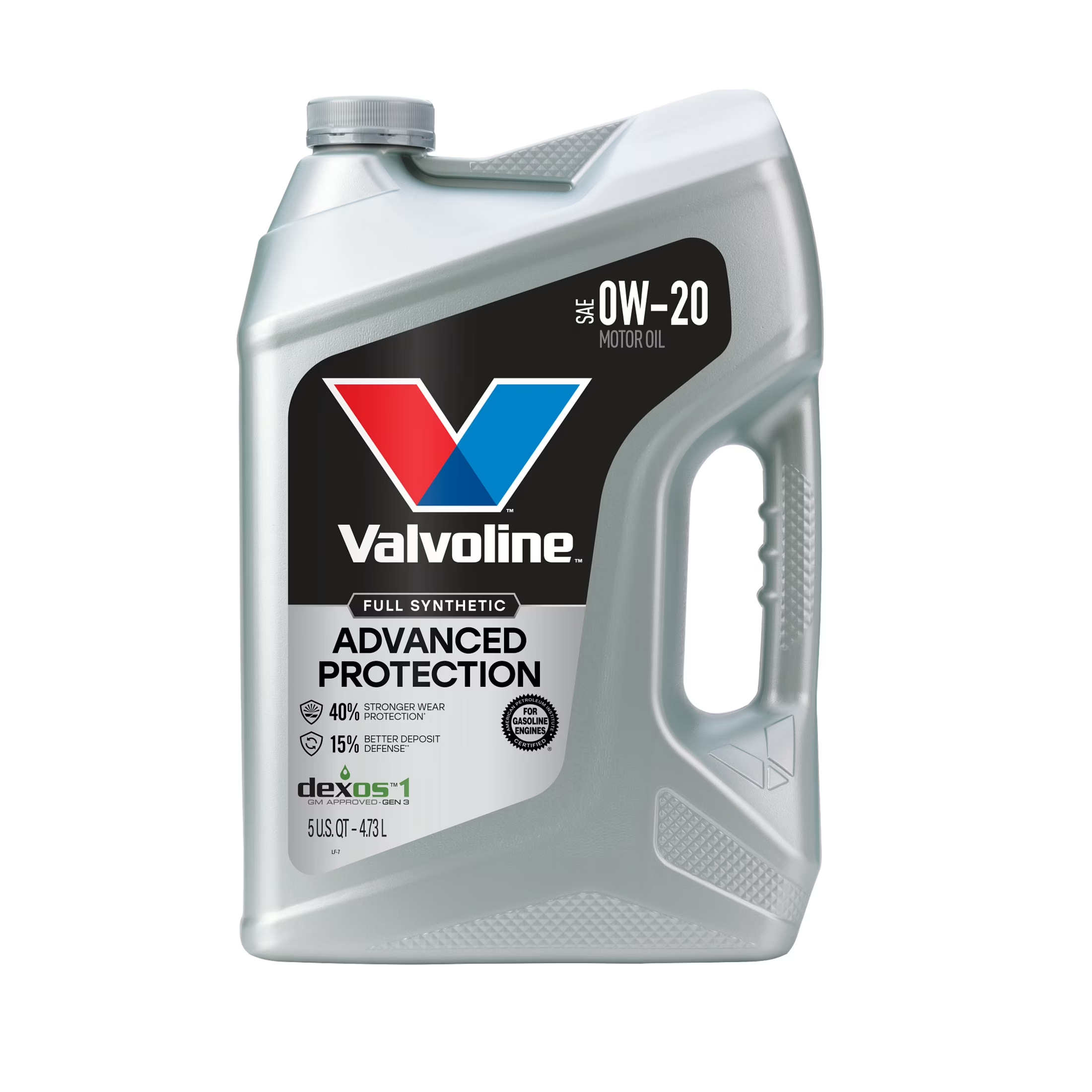
The Valvoline Advanced Full Synthetic SAE 0W-20 Motor Oil (historically aligned with the SynPower global branding architecture) sits at the center of this high-volume consumer market. At WorStor.com, our product review architecture rejects superficial marketing jargon. We evaluate lubricants based on objective fluid dynamics, laboratory safety data sheets (SDS), physical product data sheets (PDS), and verified long-term mechanical outcomes.
This comprehensive review breaks down the chemical makeup, technical performance limits, and competitive market standing of Valvoline’s flagship 0W-20 formulation to help you determine whether it belongs in your engine bay.
Product Overview
Valvoline is historically recognized as the first trademarked lubricant brand in the United States. Its Advanced Full Synthetic line serves as its primary tier product designed to combat the four major vectors of engine degradation: wear, friction, heat, and internal deposits.
The 0W-20 formulation evaluated here is engineered specifically for modern variable valve timing (VVT) and direct-injection setups that specify thin, resource-conserving multi-grade oils.
Core Engineering Specifications
- SAE Viscosity Grade: 0W-20
- Base Oil Classification: API Group III (Highly hydrocracked mineral base stock treated as full synthetic under US legal frameworks)
- Kinematic Viscosity @ 100°C: 8.4 cSt (Centistokes)
- Kinematic Viscosity @ 40°C: 44.0 cSt
- Viscosity Index: 171
- High Temperature High Shear (HTHS) Viscosity: 2.7 cP
- Noack Volatility (% weight loss): Less than 15.0% (Meets API/ILSAC limits, typically settling around 11-12% in production lots)
- Anti-Wear Additives: Zinc (~940 ppm), Phosphorus (~800 ppm)
- Regulatory Licensing: API SP, ILSAC GF-6A, ILSAC GF-7A, GM dexos1 Gen 3 (License #D335BBCH103), Ford WSS-M2C962-A1, Chrysler MS-6395
Part 1: The Weaknesses
An objective product analysis requires identifying where a product fails to perform or falls short of premium boutique formulations. The Valvoline Advanced Full Synthetic 0W-20 exhibits several technical compromises that buyers must understand.
1. Group III Base Stock Limitations vs. True Group IV/V PAO
Like the vast majority of mainstream retail synthetic oils sold in North America, Valvoline Advanced utilizes a highly refined, hydroisomerized API Group III base stock derived from crude oil processing. While legally designated and marketed as “Full Synthetic,” it does not possess the inherent molecular uniformity or ultra-low pour points of true Group IV Polyalphaolefins (PAO) or Group V Esters found in high-end boutique lubricants like Amsoil Signature Series or Red Line. Under severe track use or ultra-extended drain intervals, Group III oils exhibit faster shear degradation and slightly higher volatile oil consumption.
2. Low-Viscosity Boundary Shielding in Severe Structural Loads
The 0W-20 viscosity rating prioritizes low mechanical drag to maximize fuel efficiency. This thin profile yields a Kinematic Viscosity at 100°C of just 8.4 cSt and an HTHS rating of 2.7 cP.
While perfect for tight-clearance modern engines, this fluid film is intentionally thin. If used in high-load applications like continuous heavy-duty towing, or in legacy engines with wider bearing clearances, this thin barrier can struggle to prevent metal-to-metal boundary contact under high operational stress.
3. Reduced ZDDP Concentrations for Emissions Protection
To safeguard modern catalytic converters and exhaust aftertreatment hardware from phosphorus poisoning, Valvoline keeps its Zinc and Phosphorus (ZDDP) concentrations restricted to roughly 940 ppm and 800 ppm, respectively.
While this aligns with API SP requirements, it makes this oil completely unsuitable for vintage or classic vehicles featuring flat-tappet camshafts, which require significantly higher ZDDP levels to prevent premature lobe failure.
Part 2: The Strengths
Despite its retail-tier design compromises, the Valvoline Advanced formulation delivers exceptional protection within its intended operating parameters.
1. Robust Mitigation of Low-Speed Pre-Ignition (LSPI)
The inclusion of full GM dexos1 Gen 3 and API SP certifications means Valvoline has re-engineered its detergent package to use a carefully balanced calcium and magnesium chemistry.
In turbocharged gasoline direct-injection (TGDI) engines, excess calcium detergents can trigger catastrophic, premature fuel-air detonation during low-speed, high-torque operation (LSPI), which can easily crack pistons and bend connecting rods. Valvoline’s formulation suppresses this risk entirely, ensuring stable combustion cycles.
2. Excellent Low-Temperature Fluidity (Cold Cranking Performance)
With a cold cranking simulator (CCS) viscosity well under 6,000 cP at -35°C and a pour point dropping below -39°C, this oil provides near-instantaneous flow upon winter engine cranking.
Since the vast majority of mechanical engine wear occurs during the initial dry-start phase before the oil pump can pressurize the galleries, Valvoline’s low-temperature flow properties offer premium-tier protection for drivers in extreme northern climates.
3. Sludge Prevention and Detergency
The additive chemistry contains advanced dispersants and antioxidants that defend against thermal breakdown up to 2.5 times better than minimum industry standards. This package keeps combustion byproducts, soot, and moisture suspended in the oil film rather than allowing them to precipitate out as baked-on carbon lacquer or gelatinous engine sludge.
Part 3: Long-Term Ownership Experience
When evaluating motor oil over tens of thousands of miles across multiple service intervals, ownership outcomes depend heavily on driving habits and filtration quality.
Wear Mitigation and Oil Analysis Results
Independent Used Oil Analysis (UOA) reports from Blackstone Laboratories consistently demonstrate that Valvoline Advanced 0W-20 maintains iron, copper, and aluminum wear metals well below universal averages across standard 5,000 to 7,500-mile drain cycles. The Total Base Number (TBN), which quantifies the oil’s remaining acid-neutralizing reserve, degrades predictably but leaves a safe margin if an owner accidentally pushes past their target service indicator.
Fuel Economy and Operational Sound
Users transitioning from a standard dealership bulk oil blend to Valvoline Advanced regularly note a modest improvement in cold-weather fuel efficiency, typically between 0.5% and 1.5%.
Additionally, the oil’s shear stability helps minimize valvetrain noise and hydraulic lifter tick on cold mornings, particularly in high-clearance variable valve timing assemblies like Toyota’s Dual VVT-i or Honda’s i-VTEC systems.
Part 4: Performance Matrix
The following structural matrix breaks down the technical characteristics of Valvoline Advanced 0W-20 against standard industry metrics:
| Technical Metric | Value / Rating | Analytical Context |
| Base Oil Quality | Tier 2 (Group III Hydrocracked) | Excellent for retail standards; lacks boutique PAO baseline purity. |
| LSPI Deficit Protection | Exceptional (API SP / dexos1 Gen 3) | Optimized magnesium/calcium balance avoids pre-ignition damage. |
| Cold Start Flow Rate | Superior (Pour Point less than or equal to -39°C) | Rapid hydraulic pressure delivery to cylinder heads in winter. |
| Thermal Evaporation Loss | Good (Noack Volatility less than 15.0%) | Acceptable ring-zone consumption; requires occasional level checks. |
| Catalytic Compatibility | High (Controlled ZDDP Limits) | Prolongs life of downstream oxygen sensors and converters. |
Part 5: Competitive Comparison
To truly evaluate Valvoline Advanced 0W-20, it must be weighed against its three closest marketplace rivals.
1. Mobil 1 Advanced Fuel Economy 0W-20
Mobil 1 is the clear market benchmark. It traditionally incorporates a small percentage of true Group IV PAO base stock into its blend, giving it a slight edge over Valvoline in high-temperature shear stability and volatility resistance. However, Valvoline often presents a more accessible price point at retail and shows matching or slightly lower wear metal values in moderate 5,000-mile urban commute UOAs.
2. Pennzoil Platinum Full Synthetic 0W-20
Pennzoil Platinum relies on a proprietary Gas-to-Liquid (GTL) Group III+ base stock derived from natural gas. This yields a base fluid with fewer impurities than traditional crude-derived Group III stocks, giving Pennzoil an exceptional Noack volatility score (frequently under 10%). Valvoline balances this with an aggressive anti-wear additive layout that handles fuel dilution in direct-injection engines equally well.
3. Castrol Edge 0W-20
Castrol Edge positions itself as a premium lubricant option utilizing fluid titanium technology to alter the oil’s physical behavior under extreme pressures. Castrol offers outstanding performance under immediate friction loads, but Valvoline’s advanced detergent package tends to hold a slight advantage in keeping high-mileage variable valve passages completely clear of varnish.
Part 6: Buying Verdict
The Valvoline Advanced Full Synthetic 0W-20 is a highly refined, defensively sound engine lubricant that easily satisfies the technical warranties of major modern automakers.
Who Should Buy This Oil?
- Owners of modern naturally aspirated or turbocharged vehicles from Toyota, Honda, Nissan, Subaru, Ford, and GM calling for an ILSAC GF-6A or dexos1 Gen 3 certified 0W-20 oil.
- Commuters operating in regions with severe seasonal temperature fluctuations who require reliable, low-wear cold-start protection.
- Maintenance-conscious owners planning to follow standard factory oil drain intervals (5,000 to 7,500 miles).
Who Should Avoid It?
- High-performance track enthusiasts, heavy fleet operators, or owners towing maximum loads who require a true PAO/Ester boutique formula.
- Owners of classic, vintage, or pre-1990 vehicles requiring high-concentration ZDDP formulas for flat-tappet camshaft configurations.
Final Value Assessment
While it doesn’t match the extreme specification sheets of expensive boutique options, it provides outstanding wear defense, complete LSPI protection, and reliable engine cleanliness at a highly competitive price point.
WorStor.com Final Rating: 9.1 / 10 (Highly Recommended Retail Synthetic)
Product Link Section
To verify current pricing, container sizes (1-quart vs. 5-quart jugs), or to purchase Valvoline Advanced Full Synthetic 0W-20 directly for your next service, check the official retail listing here:
- Amazon Product Link: Valvoline Advanced Full Synthetic 0W-20 Motor Oil
FAQ Section
1. Is Valvoline Advanced Full Synthetic the same product as Valvoline SynPower?
Yes, for the North American market, Valvoline transitioned its premium retail synthetic line from the “SynPower” nameplate over to the “Advanced Full Synthetic” designation. The underlying core chemistry was upgraded to meet the newer, more stringent API SP and GM dexos1 Gen 3 technical specifications while maintaining the same premium market position.
2. Can I use this oil for an extended drain interval of 15,000 or 20,000 miles?
We do not recommend running Valvoline Advanced to extreme 15,000+ mile intervals unless you are conducting routine Used Oil Analysis to verify remaining TBN. While it handles standard 5,000 to 7,500-mile factory oil change indicators with ease, its Group III base stock degrades faster under prolonged oil life than dedicated ultra-extended-drain lubricants.
3. Will using 0W-20 instead of 5W-20 void my vehicle’s powertrain warranty?
If your owner’s manual specifies that 0W-20 is the primary required viscosity, you must use it. If your manual specifies 5W-20 but notes that 0W-20 is an acceptable alternative for cold climates, using it will not void your warranty. Always check the exact oil cap specification and manual guidelines before switching viscosities.
4. What is the difference between Valvoline Advanced Full Synthetic and Valvoline Full Synthetic High Mileage?
The High Mileage variant includes specialized seal conditioners and specific anti-wear additives designed to revive degrading, hardened engine seals and prevent oil consumption in engines that have surpassed 75,000 miles. The Advanced line reviewed here focuses primarily on deposit control, LSPI prevention, and low-viscosity efficiency for engines with healthy internal seals.
5. Why does my turbocharged car specifically require an API SP certified oil like this one?
API SP is the current standard engineered to combat Low-Speed Pre-Ignition (LSPI). In modern downsized, turbocharged direct-injection engines, older oil formulas (like API SN) can cause uncontrolled pre-ignition detonations that easily crack piston rings. The API SP specification guarantees the chemistry prevents these catastrophic combustion events.
6. Is it safe to mix Valvoline Advanced 0W-20 with other brands of synthetic oil if my level is low?
Yes, it is completely safe to mix Valvoline Advanced with other API-certified full synthetic oils of the same viscosity in an emergency. All API-licensed engine oils are engineered to be chemically compatible with one another. However, mixing will alter the specific additive balance, slightly diminishing the targeted performance benefits of Valvoline’s unique formulation.