The consumer cleaning market is flooded with commodities designed to be used rapidly and thrown away. For decades, paper towels and basic cotton rags dominated both residential kitchens and professional automotive detailing bays. However, the introduction of synthetic split microfiber shifted the physics of cleaning, replacing simple surface wiping with structural dirt trapping.
Today, a massive sub-industry of white-labeled microfiber multi-packs populates online marketplaces, making aggressive claims regarding durability, absorption metrics, and paint safety. The USANOOKS Microfiber Cleaning Cloth (12-Pack, 16×16 Inches) sits right at the center of this highly competitive segment. Utilizing hyper-focused marketing terms like “Grip-Root weave” and boasting a borderline-impossible lifespan of “1,200+ washes,” this pack positions itself as a commercial-grade solution for automotive surface management, mirror detailing, and general household sanitation.
When a brand makes longevity claims that outpace industrial-grade textile standards, smart consumers must look closer. Microfiber efficiency depends entirely on polymer ratios, weave density, edge-stitching durability, and structural stability under high-temperature washing cycles. Is the USANOOKS multi-pack a genuinely superior, long-lasting textile asset, or is it an ordinary, mass-produced 300 GSM towel wrapped in aggressive marketing jargon?
At WorStor.com, we look past the retail copy. This analytical teardown evaluates the material properties, manufacturing limitations, and real-world performance of these towels to help you decide exactly where to deploy your capital.
Product Overview and Technical Specifications
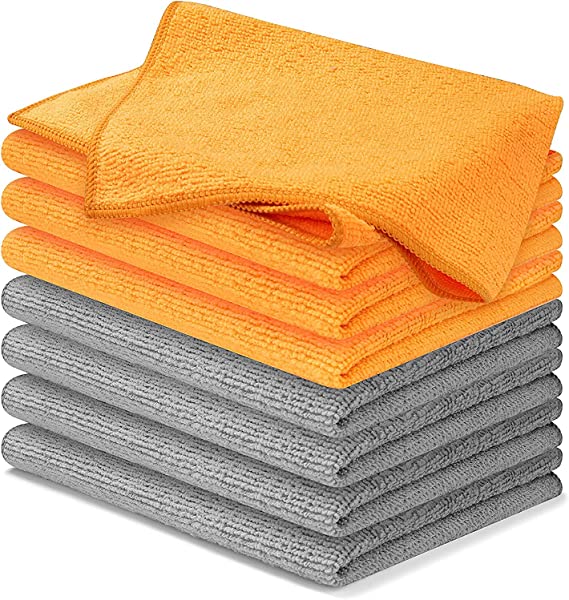
The USANOOKS Microfiber Cleaning Cloth is an all-purpose, mid-weight utility towel sold primarily in 12-piece bundles. Cut to a standard 16-inch by 16-inch square footprint, it is sized for standard hand-folding detailing techniques, allowing users to flip the cloth across eight distinct surface faces before requiring a wash.
Core Technical Specifications:
- Material Composition: Standard synthetic split polymer blend consisting of Polyester (for structural scrubbing and scraping) and Polyamide (for moisture retention and capillary lift).
- Fabric Weight / Density: 300 GSM (Grams per Square Meter). This places it precisely in the mid-weight utility class—thicker than budget 200 GSM glass cloths, but thinner than premium 500+ GSM plush dual-pile detailing towels.
- Weave Architecture: Short, closed-loop pile designed to balance physical debris collection with low linting performance. Marketing materials define this pattern as a “Grip-Root weave.”
- Edge Binding: Overlock braided perimeter stitching using polyester thread vectors. No laser or sonic-cut borderless layout is present.
- Physical Dimensions: 16 inches x 16 inches (approximately 40cm x 40cm).
- Color Profile: Double-sided contrast or single-tone selections (most commonly reviewed in industrial grey or dual-color variants).
Part 1: The Weaknesses (The Worst)
While these cloths perform admirably during light-duty household wiping, a mechanical critique of their design reveals distinct physical limitations that compromise their performance under heavy use.
1. Overlocked Stitched Edges Present Scratch Risks
The single greatest risk when using these towels on delicate surfaces—such as automotive clear coats, soft instrument cluster plastics, or high-gloss piano black interior trims—is the edge binding. Unlike premium detailing towels that use hidden silk borders or ultrasonic borderless cutting, USANOOKS utilizes a standard overlock braided stitched edge.
The thread used in this perimeter stitch is denser and less pliable than the core split-microfiber field. If you apply heavy pressure while wiping a dry automotive body panel and accidentally drag the hard stitched border across the clear coat, it can induce micro-marring and fine swirl marks. Detailing professionals will find this boundary a major limiting factor for final paint correction sweeps.
2. Immediate Fabric Stiffening and Color Bleeding
During the initial laundering cycles, these towels release a substantial volume of unbonded chemical dye. If washed alongside standard household clothing or light-colored towels, significant color transfer will occur.
Furthermore, users who wash these cloths in standard household laundry setups will notice the short-loop pile loses its out-of-the-box plush softness within five to ten dry cycles. The fibers have a tendency to mat and stiffen rapidly if exposed to any excess heat or standard residential detergents, directly reducing their surface compliance.
3. Jargon-Heavy Fabric Claims
The brand’s claim that its “Grip-Root weave works like plant root follicles” is pure marketing fluff. From a textile engineering standpoint, there is no biological mechanism or specialized structural design present.
The fabric functions entirely on standard, mechanical split-fiber capillary action—the exact same physics that powers every mid-tier microfiber product on the market. It does not possess a proprietary or revolutionary trapping mechanism beyond standard short-loop weave practices.
4. Thin Footprint for Extreme Fluid Management
At 300 GSM, these cloths simply lack the material depth to absorb large volumes of fluid during an automotive drying cycle. When wiping down a freshly washed vehicle, a single 16×16 towel becomes fully saturated after managing half of a standard hood panel. Once saturated, the cloth stops lifting water and begins pushing a thin film of moisture across the panel, resulting in visible water spots unless you continuously swap to a fresh, dry cloth.
Part 2: The Strengths (The Good)
Despite clear marketing exaggerations, the USANOOKS multi-pack offers solid, workhorse utility that outperforms budget-tier alternatives in several household scenarios.
1. Optimal Density for High-Friction Grime Removal
The 300 GSM spec is the absolute sweet spot for mechanical scrubbing. Thicker, plush 600 GSM towels tend to roll and fold over on themselves when you try to scrub dried grease or stuck-on dirt off a surface.
Because the USANOOKS cloth maintains a low-profile, short-pile loop structure, it transmits your hand’s mechanical force directly to the surface. This makes it exceptionally efficient at cleaning kitchen stovetops, heavy door jams, dusty window tracks, and engine bay plastics where you need focused, high-friction contact.A high-density close-up showing how split microfiber filaments create micro-channels to hold dust without relying on wet chemical sprays.. Source : Eurow
2. High-Efficiency Electrostatic Dust Collection
When deployed dry, the polyester components within the split-fiber matrix generate a highly reliable static charge. This charge acts like a magnet for dry, airborne particulates.
Instead of pushing dust off a shelf and into the air like standard cotton rags or feather dusters, the short-pile loops pull fine dust, dander, and pollen deeply into the fabric core. This allows users to dust sensitive home electronics, window blinds, and office furniture clean without needing chemical aerosol sprays.
3. Decent Tensile Structural Integrity
While the 1,200-wash claim is highly exaggerated, the underlying stitching structure holds together well under normal use. The overlock braided perimeter prevents the edges from unraveling or fraying even when caught on rough metal edges or screw heads during utility work. The base fabric matrix resists tearing or structural thinning, ensuring the towel remains fully intact through standard utility lifecycles.
Part 3: Long-Term Ownership Experience
Navigating the lifecycle of utility microfiber requires strict adherence to laundry physics, as improper care will quickly ruin the fabric’s properties.
The 1,200-Wash Myth vs. Real-World Longevity
In industrial textile environments, premium microfiber rarely survives past 300 to 500 validated laundering cycles before experiencing polymer thinning, edge shrinkage, or a loss of absorption performance. The claim of 1,200 washes is structurally unrealistic for a budget-conscious 300 GSM product.
In real-world residential use, owners should expect roughly 100 to 150 honest machine washes before the fibers undergo thermal degradation, clumping, or lose their capillary lift entirely.
Mandatory Laundering Protocols
To get the longest possible lifespan out of these towels, you must isolate them completely during maintenance:
- Zero Fabric Softeners: Never introduce liquid fabric softeners or dryer sheets. Softeners work by coating fibers in a thin layer of silicone or wax. If applied to microfiber, this coating clogs the split micro-channels, turning an absorbent towel into a non-absorbent plastic sheet that repels water.
- Low Thermal Exposure: Wash exclusively in cold or warm water. High-heat wash cycles or high-temperature dryer configurations will melt the ultra-fine polyamide tips, fusing the fibers together and permanently turning the soft fabric into a harsh surface that will scratch delicate finishes.
- Isolate the Load: Always wash microfiber completely separate from cotton towels. Cotton constantly sheds lint, and a microfiber towel’s natural static charge will pull that lint deep into its loops, permanently ruining its streak-free properties.
Part 4: Performance Matrix
To summarize how the USANOOKS 12-Pack holds up across standard operational categories, we have mapped out its real-world performance:
| Category | Verdict | Practical Reality |
|---|---|---|
| Build Quality | Good | The 300 GSM weight feels stable and consistent across the whole cloth. The overlock stitching is robust, though it poses a slight scratch hazard. |
| Ease of Use | Elite | The 16×16 size folds perfectly into quarters. It tracks well across flat surfaces without dragging or binding under your palm. |
| Performance | Good | Excellent dry dusting mechanics and superb high-friction grease removal. Poor performance for bulk vehicle drying due to low fluid capacity. |
| Features | Worst | No advanced features. Lacks silk borders, edge-free laser lines, or multi-pile dual-sided depth options. |
| Value for Money | Good | For a 12-pack, the price-per-cloth ratio is highly competitive, easily undercutting boutique auto detailing brands. |
| Reliability | Good | Maintains structural shape without tearing or edge fraying during standard cleaning cycles. |
| User Experience | Good | Highly satisfying for general household wiping, interior car dusting, and glass cleanup when paired with proper care. |
Part 5: Competitive Comparison
To help you place these towels in the wider context of the market, we stack the USANOOKS 12-pack against three major alternatives:
1. USANOOKS 300 GSM vs. Amazon Basics Microfiber Cleaning Cloths
Amazon Basics offers a massive bulk multi-pack that dominates the entry-level budget market.
- Material and Density: Amazon Basics towels are thinner (typically around 200–220 GSM) and noticeably smaller out of the box. They shed lint much more frequently during initial use.
- Edge Stitching: Both use standard overlock stitching, but Amazon Basics threads tear and unravel far quicker under heavy use.
- The Verdict: The USANOOKS cloths are a clear step up in density and durability, making them well worth the minor price premium over the ultra-budget Amazon Basics line.
2. USANOOKS 300 GSM vs. The Rag Company “Edgeless 300”
The Rag Company is a premium, specialized supplier catering directly to professional automotive detailers and paint correction shops.
- Border Engineering: The Edgeless 300 features a zero-stitch ultrasonic cut perimeter, completely eliminating the risk of scratching delicate clear coats.
- Material Purity: The Rag Company utilizes higher-grade Korean or Chinese split polymers that exhibit zero color bleeding and maintain softness much longer.
- The Verdict: If you are managing pristine automotive paint, exotic coatings, or soft black plastics, skip USANOOKS and buy the premium edgeless option to avoid scratching.
3. USANOOKS 300 GSM vs. Chemical Guys “Workhorse” Series
Chemical Guys provides color-coded utility packs designed to isolate towels to specific automotive zones.
- Ecosystem Utility: The Workhorse line uses explicit color-coding to prevent cross-contamination (e.g., green for paint, gray for wheels, blue for glass).
- Performance: Performance is identical to USANOOKS, as both use a comparable 300 GSM short-loop layout.
- The Verdict: USANOOKS offers a better raw price-per-towel value if you don’t need color-coded zone segregation for your workflow.
Part 6: Buying Verdict
❌ Do NOT Spend Your Capital Here If:
- You are doing high-end automotive paint correction: The overlock stitched perimeter edge introduces a fine scratching risk to freshly polished clear coats.
- You want a bulk water-drying towel: The 300 GSM density saturates too quickly to efficiently dry a full-sized vehicle without using a massive number of cloths.
- You want a maintenance-free utility rag: If you plan to throw these in the dryer on high heat with standard cotton laundry and fabric softeners, they will quickly degrade into useless, non-absorbent rags.
✅ This Multi-Pack Is a Great Buy If:
- You need a reliable household dusting system: The static performance of the dry loops is spectacular for capturing dust on electronics, blinds, and wood grain without sprays.
- You manage heavy grease and kitchen messes: The short, stiff-loop pile handles heavy scrubbing on stoves, counters, and appliances beautifully without rolling over.
- You are looking for affordable car interior detailing: Perfect for wiping down vinyl dashboards, leather seats, door panels, and plastic trim panels.
- You want a solid step up from ultra-cheap rags: For buyers tired of thin, lint-heavy bargain-bin cloths that unravel after two washes, this pack offers a meaningful upgrade in structural build quality.
Final Verdict
- Overall Analytical Score: 7.1 / 10
- Best Use Case: General household sanitation, heavy kitchen surface scrubbing, and automotive interior dusting.
- Biggest Strength: Balanced 300 GSM density that provides great tactile feedback and excellent structural durability during high-friction scrubbing.
- Biggest Weakness: Highly exaggerated marketing longevity claims paired with a standard stitched edge that can scratch delicate finishes.
The USANOOKS Microfiber Cleaning Cloth multi-pack is a capable mid-grade utility option. If you look past the corporate marketing claims about “1,200 washes” and “plant follicle weaves,” you are left with a reliable, well-proportioned 300 GSM workhorse cloth. It completely outperforms thin, budget economy packs, and its structural stitching holds up well under standard household conditions. Avoid dragging the stitched edges across delicate automotive clear coats, wash them according to strict microfiber rules, and this 12-pack will serve as a highly effective addition to your maintenance setup.
Product Gateway
To review current color choices, inspect current pricing bundles, or review shipping windows, you can check the official marketplace listing directly:
Part 7: The Cross-Examination (FAQ)
Can I use these microfiber cloths on my eyeglasses or camera lenses?
We strongly advise against it. Eyeglasses and highly sensitive optical camera lenses require an incredibly fine, flat, tight-weave cloth (often called a suede microfiber). The 300 GSM open short-loop pile on the USANOOKS towel can catch micro-particulates or sand grit within its loop field, and dragging those across delicate optical coatings can permanently scratch them. Stick to the small, smooth lens cloths provided by opticians for those surfaces.
Why do these towels feel strange or catch on the skin of my hands?
This is a completely normal physical characteristic of high-quality split microfiber. When the synthetic filaments are manufactured, they are split down to a fraction of a human hair’s width, creating tiny hook-shaped channels. If your hands are dry, calloused, or have minor skin flakes, these micro-hooks mechanically catch on your skin’s surface. It doesn’t mean the towel is defective; it’s a direct sign that the fibers are open and ready to physically grab dust and dirt particles.
Can I use these cloths with bleach-based household disinfectants?
Yes, but with a warning. Because polyester and polyamide are synthetic plastics, they have a strong resistance to chemical corrosion, meaning dilute household bleach solutions will not eat away or destroy the fibers like they would with natural cotton rags. However, heavy or concentrated bleach exposure will cause the color dye to fade rapidly and can slowly weaken the overlock edge stitching thread over multiple months of use.
What is the best way to restore the softness of these towels if they begin to stiffen?
If the cloths have stiffened because of hard water deposits or detergent buildup, you can run them through a wash cycle with warm water and half a cup of plain white distilled vinegar instead of detergent. The acid in the vinegar safely dissolves lingering mineral deposits and detergent residues trapped in the micro-channels without coating the fibers. Always air-dry or tumble-dry on the absolute lowest heat setting afterward.
Will these towels leave streaks on glass windows or house mirrors?
They will deliver a streak-free shine only if they are completely clean and used with a two-step method. Because they are 300 GSM utility cloths, a heavily saturated towel will leave a faint moisture film behind that turns into spots as it evaporates. For flawless glass results, use one damp towel to scrub the grime off the mirror, then immediately follow behind it with a completely dry, clean second USANOOKS towel to buff away the remaining moisture film.